
Most websites don’t fail all at once.
They fade.
Nothing feels urgent.
Until suddenly, everything does.
This page exists to explain why website decay happens, and how responsible organizations prevent it before it becomes expensive, stressful, or public.
After launch, there’s usually relief.
The project is complete.
The design looks polished.
The board approves.
The team moves on to the next priority.
It’s natural to assume the hard part is over.
But modern websites are not static brochures. They are living systems connected to:
Even when nothing appears broken, change is happening around your site.
When a website doesn’t evolve with its environment, it doesn’t stay neutral.
It slowly falls behind.
Many organizations believe:
“If the website is live and functioning, maintenance is optional.”
In reality, most website issues don’t come from neglect, they come from invisibility.
Because decay happens gradually, it rarely feels urgent.
Until:
By the time symptoms are visible, the underlying issues have usually been present for months.
Website decay is cumulative, not dramatic.
Plugins, themes, and core systems slowly fall out of alignment.
Small incompatibilities compound over time.
Modern browsers and devices expect faster load times.
A site that felt “fast enough” two years ago may now feel sluggish.
Search algorithms evolve.
Technical best practices change.
Structured data standards update.
Without active alignment, rankings gradually slip.
WCAG guidelines continue to refine.
New compliance expectations emerge.
What was acceptable before may no longer meet standards.
Programs evolve. Leadership shifts.
Strategic priorities change.
But the website remains frozen in a previous chapter.
None of these alone cause collapse.
Together, they quietly erode trust, usability, and credibility.
Modern websites operate in an environment of constant change.
A website that is not monitored and maintained doesn’t remain stable.
It slowly accumulates technical debt.
Maintenance is not about constantly changing things.
It’s about protecting what already exists.
There’s an important distinction.
Maintenance reacts.
Stewardship protects, monitors, and improves intentionally.
Maintenance fixes issues after something breaks.
Stewardship identifies risk before it escalates.
For mission-driven organizations - especially museums, nonprofits, cultural institutions, and educational entities - this distinction matters.
Your website represents:
Treating it as a short-term project rather than a long-term asset increases institutional risk.
Digital stewardship means:
It’s not about activity. It’s about sustainability.
Not every site needs constant intervention.
Ongoing care becomes especially important when:
In these cases, website care is not an add-on.
It’s responsible governance.
When website maintenance is postponed for extended periods, organizations often experience:
Not because anyone made a poor decision.
But because no one was actively monitoring the system.
Time, not negligence, is the most common cause of decay.
A well-maintained website doesn’t feel busy or constantly changing.
It feels:
Behind the scenes:
Healthy websites rarely require dramatic intervention.
They benefit from consistent oversight.
When decay becomes visible, the immediate reaction is often:
“We need a full redesign.”
Sometimes that’s true.
Often, strategic optimization and structural cleanup can extend a website’s lifespan significantly.
Understanding the difference between:
Requires clarity before committing budget or time.
That’s why assessment should come before action.
If you’re questioning whether website decay is already happening, or whether ongoing care is necessary, clarity should come first.
The Executive Website Clarity Assessment provides:
So decisions can be made thoughtfully, not reactively.
Most website failures are not dramatic.
They are gradual.
Understanding that removes panic from the conversation.
Websites decay because time moves forward.
Protection requires intention.
When treated as institutional assets instead of temporary projects, websites can remain strong, visible, and trustworthy for years, without constant disruption.
Sustainability is not about doing more.
It’s about watching closely enough to prevent avoidable loss.

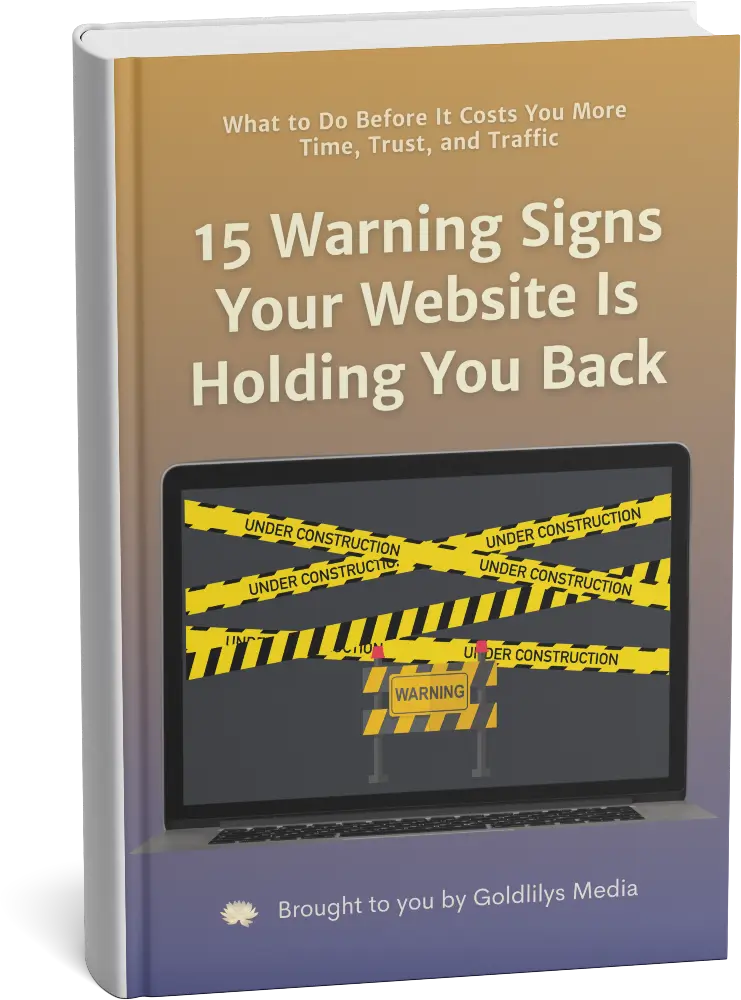
Not ready to commit yet?
I get it.
Get my free guide:
"15 Warning Signs Your Website Is Holding You Back"