Why Every Institutional Website Requires Maintenance
“A living cell requires energy not only for all its functions, but also for the maintenance of its structure.” – Albert Szent-Gyorgyi
A website is not a project you complete. It is a system you steward.
This distinction sounds straightforward, but most organizations behave as though the opposite is true.
They invest significantly in a website build, launch with confidence, and then treat maintenance as something to handle reactively: when something breaks, when someone notices an error, or when the site becomes embarrassing enough to warrant attention.
By then, the cost of inaction has already accumulated.
What maintenance actually means for an institutional website
Maintenance for a mission-driven organization’s website is not primarily a technical concern. It is an institutional credibility concern.
There are three layers of maintenance that matter.
The first is preventative: keeping the underlying systems current so that vulnerabilities do not accumulate and performance does not degrade. Platform updates, plugin compatibility, security patches, SSL certificates, backup verification. These are not visible to visitors, but their absence eventually becomes visible as slowness, errors, or worse.
The second is operational: keeping the content current so that the site reflects the organization as it actually exists today. Updated leadership, current programs, accurate contact information, relevant case studies. An organization that has evolved but whose website has not creates a credibility gap that a first-time visitor experiences before anyone from the organization speaks to them.
The third is adaptive: responding to how the organization’s needs and audience behaviors change over time. A site built two years ago was built around what the organization knew about its visitors then. Those visitors have changed. Their devices, their expectations, their search behavior, and their trust signals have all shifted. A website that does not adapt quietly falls behind.
The cost of treating maintenance as optional
Organizations that defer maintenance consistently encounter the same pattern. Minor issues accumulate until they require major remediation. Content that could have been updated incrementally requires a full review. Platform components that needed gradual modernization require a disruptive migration.
The direct cost: staff time, development hours, potential data loss, is measurable.
The indirect cost is harder to quantify, but often larger: the funder who visited before the leadership page was updated, the board candidate who encountered a broken form, the institutional partner who found a program that no longer exists prominently featured on the homepage.
These are not dramatic failures. They are quiet ones, invisible to the organization but visible to every visitor who arrived during the period of neglect.
What stewardship looks like in practice
Organizations that maintain consistent institutional credibility through their websites share a common approach. They treat the website as an ongoing responsibility rather than a completed project.
That means someone is accountable for keeping it current, not just technically functional, but organizationally accurate. It means updates happen on a rhythm rather than in response to crisis. It means the relationship between the organization and whoever maintains the site is ongoing rather than transactional.
For most mission-driven organizations, that relationship is best structured as a retainer: a standing arrangement that provides regular attention without requiring the organization to initiate a new project every time something needs care.
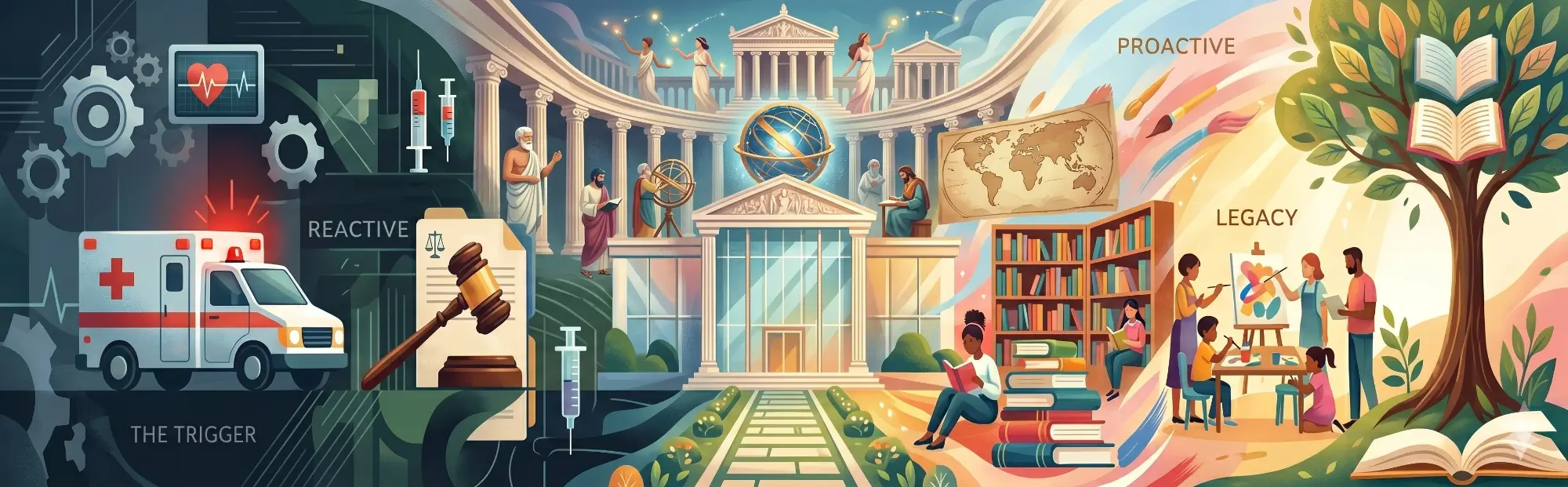
The alternative is the reactive model: waiting for something to fail, then scrambling to address it under pressure, at higher cost, with greater disruption.
The organizations whose websites consistently support their mission over time are not the ones with the largest budgets. They are the ones that decided to treat their website as a long-term institutional asset from the beginning – and maintained that commitment through the work that followed.
“Without continual growth and progress, such words as improvement, achievement, and success have no meaning.” – Benjamin Franklin
How do we know if our website has fallen behind on maintenance?
The clearest signals are organizational rather than technical. If your site still features programs that have changed, staff who have left, or language that no longer reflects how your organization describes its work, maintenance has been deferred. Technical signals include slow load times, plugin conflicts, or security warnings in browsers. Both categories are worth addressing, but the organizational accuracy gaps are typically the ones that most affect institutional credibility.
What is the difference between a website retainer and hiring someone to fix things when they break?
A retainer provides proactive, ongoing care: updates happen on a rhythm, issues are addressed before they become visible, and the person maintaining the site understands the organization well enough to make good judgment calls without requiring detailed direction each time. Hiring someone reactively means paying more per incident, getting lower-quality work from someone without institutional context, and accepting that problems will persist until they become urgent enough to address. The cost difference over time is significant.
What should a website maintenance arrangement actually include?
At minimum: regular platform and plugin updates, backup verification, performance monitoring, security checks, and content updates as the organization evolves. For most mission-driven organizations, the content dimension, keeping the site organizationally accurate, is the highest-value component. A technically current site that no longer reflects the organization is still a credibility liability. Both dimensions require sustained attention, not a one-time fix.

Author Bio
Frances Naty Go is the founder and Website Systems Architect of Goldlilys Media, a San Diego web systems consultancy established in 2013. She builds website masterpieces for museums, cultural institutions, nonprofits & mission-driven organizations in healthcare and life sciences: structured sites that educate, earn trust, and stay easy for teams to update for years.
Frances has built websites professionally since 2010 and has supported the Balboa Park Online Collaborative’s web systems since 2015. A UC San Diego Computer Science graduate, she leads both strategy and build on every engagement, combining durable architecture, SEO, and AI visibility so the organizations she serves are found, understood, and trusted.
Does Your Website Still Fit Where You're Headed?
A five-part checklist to help museums, nonprofits, and mission-driven organizations assess whether your website needs a redesign, a rebuild, or something else entirely.