
Why Your Institution’s Story Belongs on Your Website
Every organization has a story. Not a tagline or a mission statement – a real story, with a problem that needed solving, a turning point, and a direction that emerged from it.
That story is the most underused asset on most institutional websites.
A website is not a brochure. It is not a list of programs and services.
It is the place where a stranger: a potential funder, a board candidate, a community partner, a visitor, decides whether your organization is worth their time, trust, and investment. That decision happens quietly, privately, before anyone fills out a form or picks up a phone.
What makes that decision go in your favor is not your credentials. It is the coherence of your story.
The structure already exists
Every compelling narrative follows a recognizable arc: the context that explains why something needed to change, the tension that made change necessary, the moment of clarity, and the resolution that followed. In literature this is called plot structure. In institutional life, it is called history, and most organizations have more of it than they realize.
On a website, this arc maps directly to how visitors move through your content. Your About page establishes context. Your mission communicates what problem your organization exists to solve. Your programs and services show how you solve it. Your outcomes, case studies, and client stories demonstrate what changes as a result.
Most institutional websites have all of these pages. What they lack is the thread that connects them, the sense that every section is part of one coherent story rather than a collection of separate documents.
Your visitor needs to see themselves in it
A story only works if the reader recognizes something of themselves in it. For an institutional website, that means every page should answer an implicit question your visitor is already asking: what does this mean for an organization like mine?
This is not about making your website about your visitor instead of your organization.
It is about framing your organization’s work in terms that make its relevance immediately legible.
A museum director who lands on your site should be able to tell within sixty seconds whether your work speaks to the challenges they are navigating, not because you listed their sector in a dropdown, but because the language, the examples, and the framing reflect how they actually think.
Why this matters before anything else is built
Organizations that invest in a new website before clarifying their story almost always end up with a website that looks modern, but communicates nothing distinctive.
The visual execution improves. The underlying signal stays the same.
Story clarity is not a marketing exercise. It is the prerequisite for a website that does real institutional work, one that earns trust from strangers who have never heard of you, and confirms trust for those who already have.
The website that holds your story well is the one that keeps working long after it is built.
Does my organization’s story really belong on a website?
Yes. Your website is where funders, board candidates, and community partners form their first impression, privately, before anyone from your organization speaks to them. That is exactly where your story needs to be.
We have an About page and a mission statement. Isn’t that enough?
Those tell people what your organization is. A story tells them why it exists and what it means for someone like them to encounter your work. Facts without a connecting thread rarely build trust on their own.
How do we know if our website is telling our story or just describing our programs?
Read it as a stranger would. If you can explain why the organization exists and what changes because of its work, the story is there. If you can only list what it offers, it isn’t.
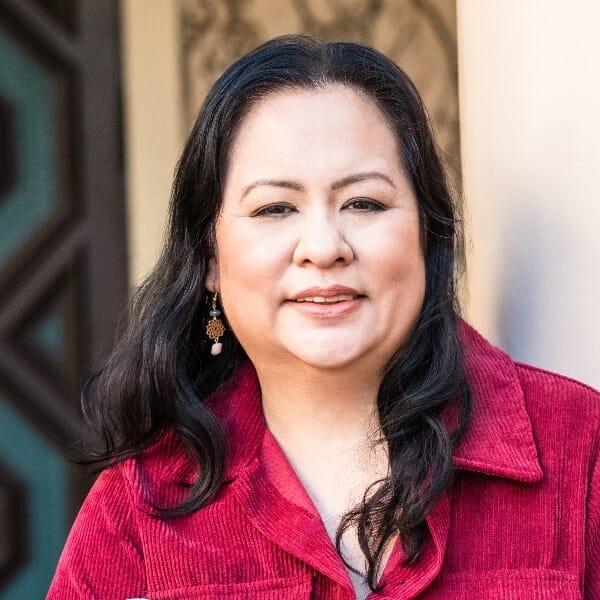
Author Bio
Frances Naty Go is the founder of Goldlilys Media, where she helps mission-driven organizations turn their websites into clear, durable systems that support meaningful work over time. She works with museums, nonprofits, health and wellness brands, higher education, life sciences, travel organizations, and expert-led businesses.
With a background in Computer Science from UC San Diego, Frances brings a thoughtful, strategic approach to building digital experiences that educate, orient, and build trust, without unnecessary complexity.
Does Your Website Still Fit Where You're Headed?
A five-part checklist to help museums, nonprofits, and mission-driven organizations assess whether your website needs a redesign, a rebuild, or something else entirely.