
The Organizations That Don’t Wait for Something to Go Wrong
There is a category of institution that only exists because something went wrong first.
Insurance pays out after the accident. The lawyer arrives after the dispute. The doctor treats you after the illness begins.
These are honorable, necessary professions, and the people in them often do extraordinary work. But the system they operate within is built around a triggering event.
Something bad happens, and then the system responds. That shapes everything about how value flows through it.
Most of us accept this as the natural shape of how institutions work.
We build financial safety nets for our families. We keep attorneys on retainer. We maintain health coverage.
All of it is organized around the same assumption: harm is coming, and we need to be ready.
But there is another category entirely.
Organizations that don’t require harm to justify their existence
A museum does not need anyone to be suffering to open its doors. It does not wait for a crisis, a loss, or a triggering event.
It simply exists: holding culture, memory, and meaning in trust for anyone who walks in.
The value it offers is not remedial. It does not heal a wound or resolve a dispute. It enriches a life that is already being lived.
The same is true of a library. A cultural center. An arts education program. A humanities research institution. A science museum that lets a child understand the physical world for the first time.
None of these require bad things to happen first. Their entire purpose is to exist before bad things happen, and to build the kind of society where fewer bad things do.
This is a profound distinction that rarely gets named clearly.
What history tells us about societies that forget this
Every civilization remembered as genuinely great, not just powerful, but worth remembering, invested heavily in arts, culture, science, education, and public knowledge alongside its capacity for defense.
Ancient Athens. The Islamic Golden Age, which preserved and advanced mathematics, astronomy, medicine, and philosophy while much of the world stagnated. The Italian Renaissance.
Post-war Japan, which rebuilt its cultural and educational infrastructure in parallel with its economic recovery and became one of the most admired societies in the world for the depth and originality of what it produced.
What made these periods remarkable was not military dominance alone. It was the simultaneous investment in what humans build and create when they are not at war.
A society that funds only the capacity for conflict, and systematically defunds the institutions that build culture, knowledge, and shared meaning, is not projecting strength.
It is describing a civilization organized entirely around what goes wrong, and increasingly unable to invest in what makes life worth living when things go right.
That has never been the foundation of anything history looks back on with admiration.
The institutions that don’t wait for something to go wrong are not luxuries. They are the evidence that a society believes it has a future worth building toward.
Why this connects to legacy
In a previous post, I wrote about the difference between legacy and inheritance. Inheritance flows within your circle, to family, to people who already know you, through relationships that already exist. Legacy reaches beyond that circle entirely, to people who have no direct connection to you and may never know your name.
Financial insurance is the most honest version of inheritance. It is protective, loving, and entirely justified, and it is structurally limited to the people already in your life.
It requires a bad event to activate. It keeps value circulating inside an existing relationship. It cannot, by design, reach a stranger.
Legacy operates differently. Legacy is what continues to do good work for people you will never meet, in circumstances you could not have predicted, long after you are no longer there to explain or defend it.
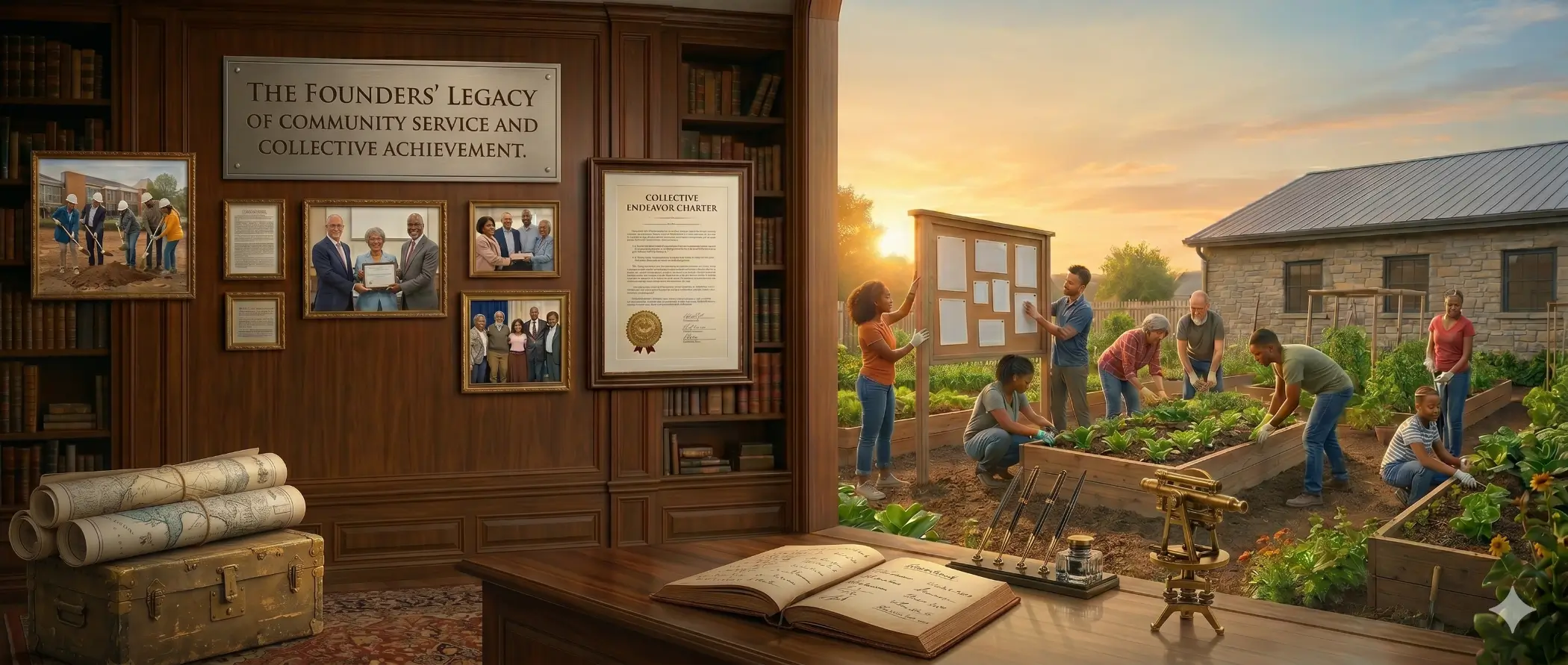
The organizations that don’t wait for something to go wrong are the ones building legacy infrastructure.
They are investing in the conditions that make life better before the crisis arrives, not responding to damage, but preventing the kind of cultural, intellectual, and communal impoverishment that makes societies fragile in the first place.
What this means for the people who run these organizations
If you lead a museum, a nonprofit, a cultural institution, or a mission-driven organization of any kind, you are doing something structurally different from most of the economy.
You are not waiting for someone to get sick, lose something, or need legal protection before your work becomes relevant.
You are making the case, every day, that enrichment matters before the emergency.
That culture is worth protecting when things are still good enough to protect it.
That the stranger who hasn’t walked through your door yet deserves the same investment as the donor who already has.
That is not a small thing. Particularly at a moment when funding for exactly these institutions is being redirected toward systems that, by design, only activate when things go wrong.
The website as legacy infrastructure
A website built for a mission-driven organization should work the same way the organization itself works: it should not require prior context, an existing relationship, or a triggering event to make its case.
It should reach the person who has never heard of you, who is not yet in crisis, who is simply curious, and make them feel the significance of what you do before they have any reason to need you.
That is the difference between a website that documents an organization and one that carries it forward.
“Not everything that counts can be counted, and not everything that can be counted counts.” – Albert Einstein
The organizations that understand this are the ones worth building for.
Frequently Asked Questions
What is the difference between a legacy organization and a reactive institution?
A reactive institution only activates after something goes wrong. A legacy organization creates value before harm arrives, and exists independent of it entirely.
Why do arts, culture, and humanities organizations matter to a healthy economy?
Every civilization remembered as genuinely great invested in culture, science, and education alongside defense. Defunding the institutions that build meaning and shared knowledge is not a sign of strength. History is consistent on where that leads.
How is financial insurance different from legacy?
Insurance protects the people already in your circle and requires a bad event to activate. Legacy reaches people you will never meet, long after you are no longer there to explain what you built. One keeps value inside the room. The other carries it forward.
What makes a mission-driven organization’s website different from a standard business website?
It should not require prior context or an existing relationship to make its case. The most important visitor is the one arriving with no prior knowledge of who you are or why you matter.
Why do cultural institutions need strong websites now more than ever?
Public funding for arts, culture, and humanities is shrinking. The organizations that can reach beyond existing relationships – and make their case clearly to a stranger – are the ones positioned to survive and grow regardless of what the funding environment does next.

Author Bio
Frances Naty Go is the founder and Website Systems Architect of Goldlilys Media, a San Diego web systems consultancy established in 2013. She builds website masterpieces for museums, cultural institutions, nonprofits & mission-driven organizations in healthcare and life sciences: structured sites that educate, earn trust, and stay easy for teams to update for years.
Frances has built websites professionally since 2010 and has supported the Balboa Park Online Collaborative’s web systems since 2015. A UC San Diego Computer Science graduate, she leads both strategy and build on every engagement, combining durable architecture, SEO, and AI visibility so the organizations she serves are found, understood, and trusted.
Does Your Website Still Fit Where You're Headed?
A five-part checklist to help museums, nonprofits, and mission-driven organizations assess whether your website needs a redesign, a rebuild, or something else entirely.