

Why the Name Goldlilys Media Means What It Does
Every organization’s name is a decision made at a specific moment, about what the work means, who it is for, and what the founder wanted to carry forward into every engagement that followed.
The name Goldlilys Media was made the same way.
Where the name came from
The inspiration was Monet’s Water Lilies, one of the most recognized bodies of work in Western art history, and one of the clearest examples of what it means to build something that outlasts the moment it was made. Monet worked on the Water Lilies series for more than twenty years, returning to the same subject with increasing depth and refinement rather than moving on to something new.
That instinct: building something with enough care that it continues to do its work long after it is finished, is the philosophy behind every website Goldlilys Media builds.
Gold references permanence and value. Lilies references the Water Lilies paintings directly. Together they became Goldlilys, a single word, deliberately combined, with no direct equivalent anywhere else.
Why the name was built to be findable
A name that exists nowhere else in the world is easier to find than one that competes with similar names. When someone searches for Goldlilys, the results are almost entirely connected to this organization. That is not an accident, it is a design decision made in 2013 that continues to compound in value.
This is the same logic that should inform how mission-driven organizations think about their own digital presence. Distinctiveness is not just a brand value, it is a practical advantage. Organizations whose name, positioning, and online presence are specific enough to be unambiguous are easier for the right people to find, remember, and return to.
What a name communicates before anything else is read
A name is the first signal an organization sends, before a visitor reads a single page, before a funder reviews a proposal, before a board candidate considers an invitation. It establishes the register in which everything that follows will be read.
Goldlilys Media was named to communicate that the work here is connected to legacy, to things built with enough care and intention to remain useful and meaningful over time. That is not a tagline. It is the standard against which every project is evaluated.
The website masterpieces this organization builds are named deliberately too. Not because “masterpiece” is a marketing word, but because it names the standard: durability, quality, and the kind of craftsmanship that does not need to be replaced every two years.
The question worth sitting with
What does your organization’s name communicate to a first-time visitor who has no prior relationship with you? Does it signal what you do, who you serve, and what standard you hold yourself to, or does it require explanation before it becomes meaningful?
For organizations whose name has outgrown its original context, or whose digital presence no longer reflects the identity the name was meant to carry, that gap is worth addressing deliberately rather than deferring.
Why does the story behind a name matter for institutional credibility?
Because a name with a clear origin and deliberate meaning is easier to trust than one that feels arbitrary. For mission-driven organizations, the story behind the name is often the first evidence of whether the organization’s values are genuine or performed. Visitors who encounter that story early form a different impression than those who encounter only a logo.
How does a distinct name affect how an organization is found online?
A name with no direct equivalent anywhere else in the world is significantly easier to find, rank for, and own in search results. Organizations whose names are generic or shared with similar entities compete for visibility they should not have to earn. Distinctiveness in naming is a practical advantage that compounds over time, not just a brand preference.
Should our organization’s name appear prominently on our website, or let the work speak for itself?
Both, but in the right order. The name earns attention. The work builds trust. An organization that leads with its name without explaining what it means misses the opportunity to connect. One that explains the work without anchoring it in a name and identity misses the opportunity to be remembered. The name and the work should reinforce each other on every page that matters.
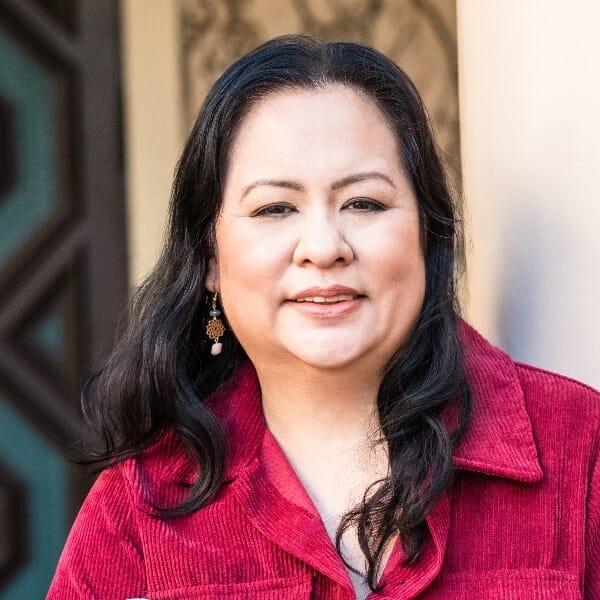
Author Bio
Frances Naty Go is the founder and Website Systems Architect of Goldlilys Media, a San Diego web systems consultancy established in 2013. She builds website masterpieces for museums, cultural institutions, nonprofits & mission-driven organizations in healthcare and life sciences: structured sites that educate, earn trust, and stay easy for teams to update for years.
Frances has built websites professionally since 2010 and has supported the Balboa Park Online Collaborative’s web systems since 2015. A UC San Diego Computer Science graduate, she leads both strategy and build on every engagement, combining durable architecture, SEO, and AI visibility so the organizations she serves are found, understood, and trusted.
Does Your Website Still Fit Where You're Headed?
A five-part checklist to help museums, nonprofits, and mission-driven organizations assess whether your website needs a redesign, a rebuild, or something else entirely.