
Why Website Decisions Are Harder to Reverse Than They Look
Most organizations approach a website project as a series of decisions that can be revisited if something does not work out. Choose a platform, build the structure, publish the content, and if anything feels wrong, adjust it later.
This assumption is the source of most expensive website problems.
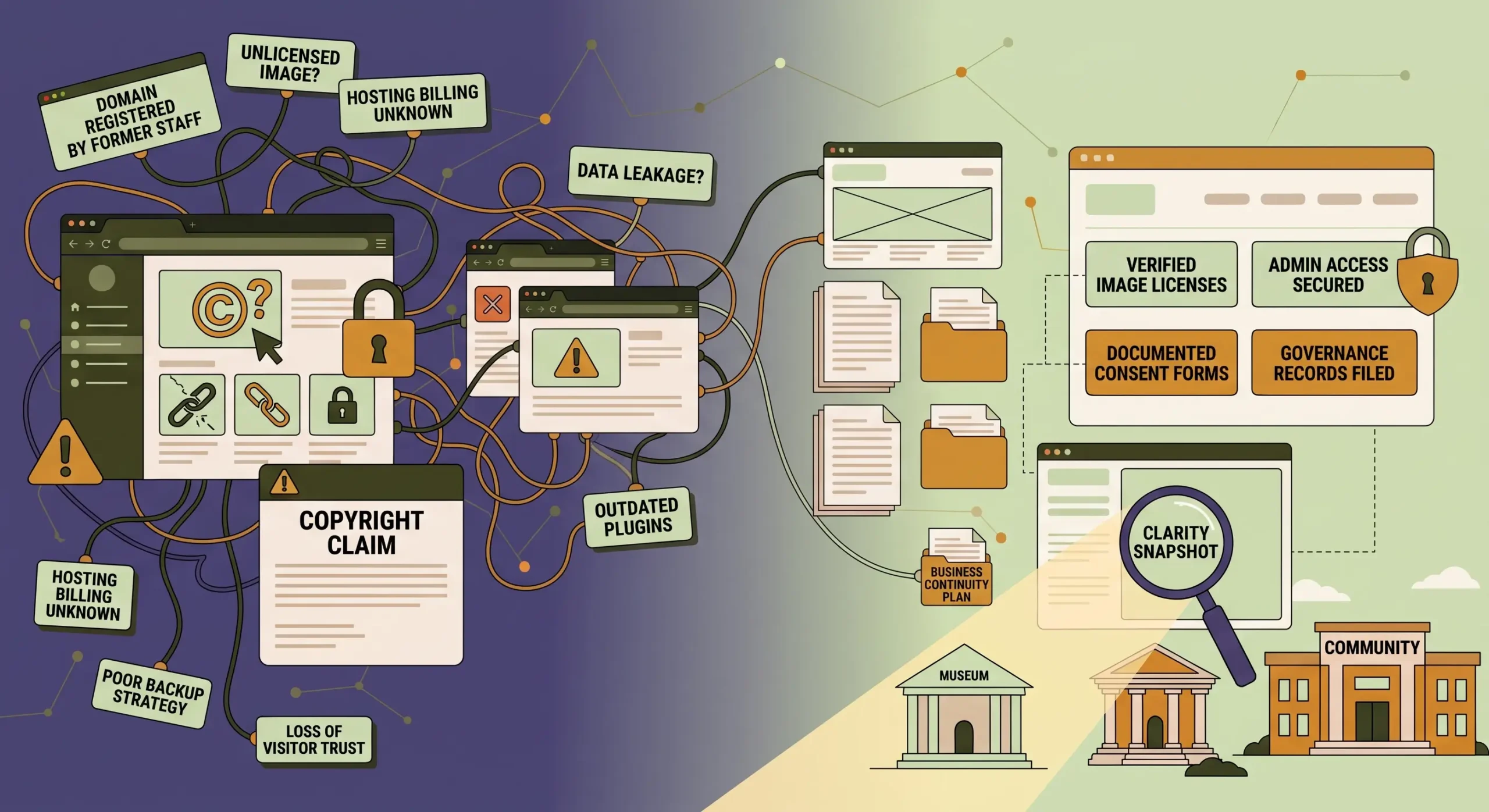
Website decisions do not work like that. They work more like a branching structure, where each choice made early determines what is possible at every stage that follows, and reversing a decision made at the foundation requires undoing significant work that was built on top of it.
What makes website decisions hard to reverse
When an organization chooses a platform, that choice determines what content structures are possible, what integrations are available, what security posture the site can maintain, and what the maintenance burden will look like for years. A platform chosen because it was familiar or inexpensive rarely announces its limitations at the time of the decision. It announces them when the organization has grown and the platform cannot accommodate what the work now requires.
When an organization builds a navigation structure around its internal departments rather than its visitors’ goals, that choice shapes every content decision that follows. Fixing it later means restructuring content that was organized around the wrong logic – not editing a few pages, but reconsidering the entire information architecture.
When an organization defers content strategy until after the platform and structure are chosen, the content adapts to what has already been built rather than the platform and structure being chosen to support what the content needs to accomplish. The result is a site where the thinking is visible in layers – each decision made reactively to the one before it rather than from a shared understanding of what the site needs to do.
Why early clarity is worth more than late correction
The organizations whose websites consistently support their mission over time are not the ones with the largest budgets. They are the ones that made the foundational decisions: platform, structure, audience, purpose – before any execution began.
That early clarity does not eliminate the complexity of building a good website. It determines whether the complexity compounds or resolves.
- A project that begins with clear answers to who the site is for, what each visitor needs to accomplish, and what the organization needs the site to do in three years as well as at launch produces decisions that reinforce each other
- A project that begins with a visual brief or a technology preference produces decisions that increasingly constrain each other
The question worth asking before any website project begins is not “what do we want the site to look like?”
It is “what do we need the site to accomplish, for which visitors, in which situations, and what decisions do we need to make first to make that possible?”
That question, answered clearly, determines everything that follows. Skipping it does not save time. It defers the cost of not having answered it.
What this means for institutional leadership
For museum directors, nonprofit executives, and organizational leaders accountable to boards and funders, the practical implication is straightforward. The most expensive website decisions are not the ones made at launch. They are the ones made without sufficient clarity about what the site needs to accomplish – and discovered, at considerable cost, when the site no longer fits where the organization has gone.
The organizations that treat a website project as a strategic decision rather than a production project consistently get more durable results, spend less over time, and face fewer situations where a site that was recently built already needs to be reconsidered.
Frequently Asked Questions
How do we know if we have enough clarity to begin a website project?
You have enough clarity when you can answer three questions specifically: who are the two or three visitors whose confidence matters most to your organization, what does each of them need to accomplish on the site, and what does the site need to communicate that your organization cannot currently say clearly. If those answers are vague, the project will produce a site that looks current but functions generically.
What is the most common early website decision that causes problems later?
Platform selection made on familiarity or cost rather than fit. A platform that works well for a small organization with simple content needs creates real constraints for an institution managing multiple programs, complex stakeholder relationships, and serious funder accountability. The cost of migrating away from the wrong platform later is significantly higher than choosing correctly at the outset – in staff time, development hours, and the disruption of rebuilding on a new foundation.
Is it possible to course-correct a website that was built without sufficient early clarity?
Sometimes, and it depends on whether the problems are structural or surface. Content that no longer reflects the organization, language that has drifted from current positioning, and imagery that feels dated are all fixable through ongoing maintenance. A platform that cannot support the organization’s complexity, a navigation structure built around internal assumptions rather than visitor goals, and a content architecture that reflects a different strategic period are structural problems – and they require a more deliberate intervention than incremental updates can resolve.

Author Bio
Frances Naty Go is the founder and Website Systems Architect of Goldlilys Media, a San Diego web systems consultancy established in 2013. She builds website masterpieces for museums, cultural institutions, nonprofits & mission-driven organizations in healthcare and life sciences: structured sites that educate, earn trust, and stay easy for teams to update for years.
Frances has built websites professionally since 2010 and has supported the Balboa Park Online Collaborative’s web systems since 2015. A UC San Diego Computer Science graduate, she leads both strategy and build on every engagement, combining durable architecture, SEO, and AI visibility so the organizations she serves are found, understood, and trusted.
Does Your Website Still Fit Where You're Headed?
A five-part checklist to help museums, nonprofits, and mission-driven organizations assess whether your website needs a redesign, a rebuild, or something else entirely.